AI-powered search experiences are changing how users discover information online. Platforms like OpenAI ChatGPT, Google AI Overview, and Microsoft Copilot no longer rely only on displaying a list of blue links. Instead, they generate direct answers by extracting and summarising information from selected sources.
This shift is changing the role of SEO. Ranking on search engines is still important, but visibility alone is no longer enough. Today, brands also need to earn AI citations by publishing content that AI systems can easily understand, trust, and reference.
The reality is simple: Not every webpage gets cited.
AI systems prioritise content that demonstrates clarity, relevance, topical authority, and credibility. Websites that structure their content effectively have a much higher chance of appearing in AI-generated answers, featured snippets, People Also Ask (PAA), and AI Overviews.
In this guide, we will explore how AI systems select content, what makes a page citable, and how businesses can optimise their content using Answer Engine Optimisation (AEO) and Generative Engine Optimisation (GEO) strategies.
Why AI Citations Matter More Than Rankings?
Traditional SEO mainly focused on rankings and clicks. The higher a webpage ranked, the greater its chances of receiving organic traffic. However, AI-powered search is changing user behaviour significantly.
Many users now receive complete answers directly within AI-generated responses without visiting multiple websites. This creates a new visibility challenge. Instead of competing only for rankings, businesses are now competing to become the source AI systems choose to reference.
Why AI citations matter:
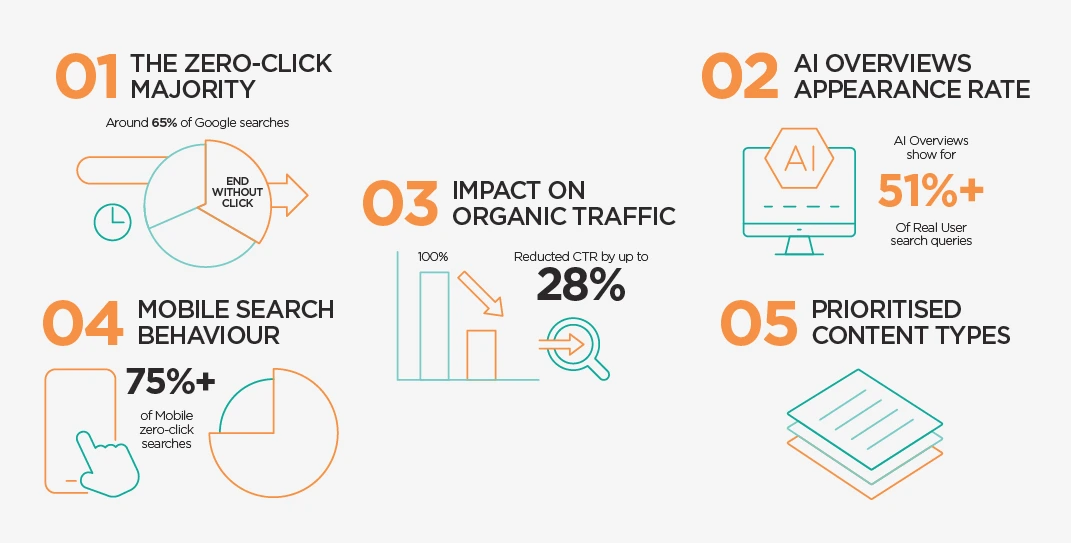
They improve brand visibility even in zero-click searches
They increase trust and perceived authority
They strengthen brand recall in AI-generated conversations
They position your business as a reliable industry source
They improve long-term discoverability across AI platforms
In many cases, being cited by AI systems can create stronger authority signals than simply ranking on page one.
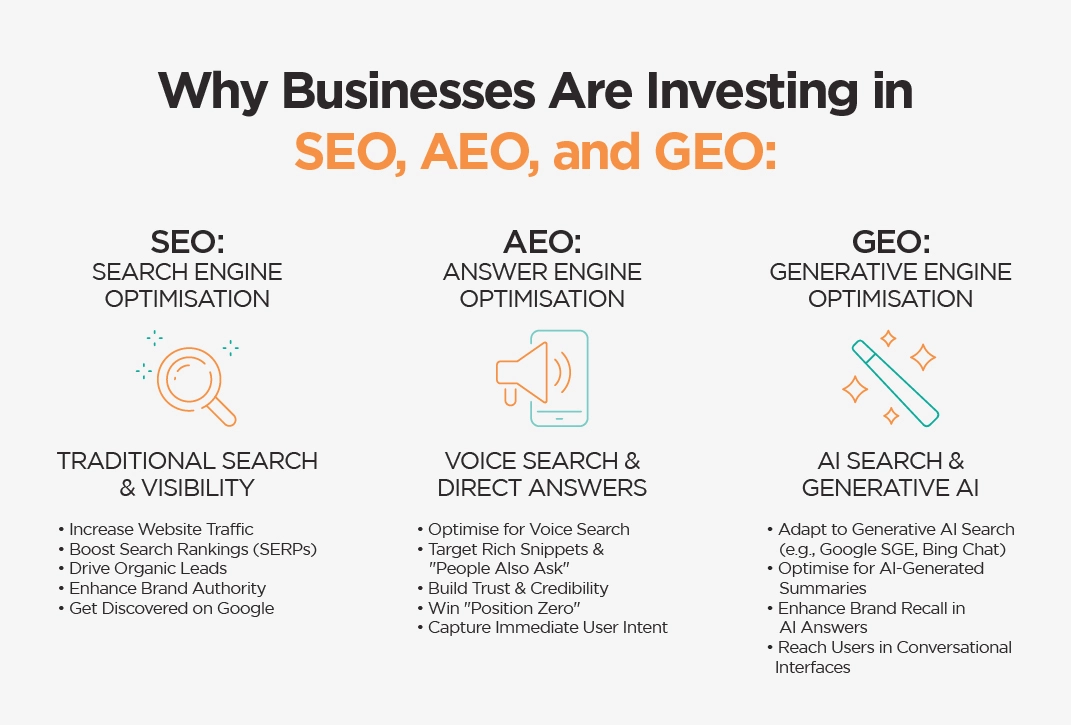
This is why businesses are increasingly investing in:
These three approaches now work together rather than separately.
How AI Systems Retrieve and Select Content?
AI systems do not randomly select webpages. They follow a layered retrieval and evaluation process that combines search indexing, language understanding, relevance scoring, and trust assessment.
Understanding this process is essential for improving your chances of earning AI citations.
1. Query Understanding and Intent Matching
The first step involves understanding the user’s intent.
AI systems analyse:
What is the user asking?
Whether the query is informational or transactional
How detailed should the response be?
Whether the user expects definitions, comparisons, tutorials, or opinions
Content that directly aligns with user intent is significantly more likely to be cited.
Example:
Query: “What is Answer Engine Optimisation?”
AI prefers concise definition-focused content.
Query: “How to optimise content for AI search in 2026?”
AI prefers updated, actionable, step-by-step guides.
This is where properly structured AEO content becomes highly valuable.
2. Retrieval from High-Authority and Relevant Sources
Once intent is understood, AI systems retrieve content from indexed webpages and trusted domains. They commonly prioritise:
High-authority websites
Frequently referenced sources
Topically relevant pages
Pages with strong engagement and trust signals
However, domain authority alone is not enough anymore. A highly authoritative website with poorly structured content may still lose citations to a smaller website with clearer and more extractable information.
AI systems increasingly prioritise:
Content clarity
Structured formatting
Semantic relevance
Ease of extraction
This is why smaller niche websites can still earn AI citations when their content is genuinely useful and well organised.
3. Content Extraction and Answer Fit
AI-generated answers rely heavily on content extraction. AI systems prefer content that:
Answers questions directly
Uses logical heading structures
Provides concise explanations
Includes contextual depth without unnecessary fluff
This is where Answer Engine Optimisation (AEO) plays a major role. Content formats AI systems commonly prefer:
Direct answers immediately below headings
Short explanatory paragraphs
Structured comparisons
FAQ sections
Step-by-step instructions
Context-rich examples
Pages that bury answers inside long, unstructured paragraphs are far less likely to be cited.
4. Trust, Accuracy, and Credibility Evaluation
AI systems evaluate whether content appears trustworthy before referencing it. This aligns closely with Google’s E-E-A-T principles:
Experience
Expertise
Authoritativeness
Trustworthiness
Trust signals AI systems commonly evaluate:
Accuracy and factual consistency
Topical expertise
Author reputation
Brand credibility
External references and mentions
Content depth and completeness
Websites that consistently publish reliable, high-quality information build stronger citation potential over time.
5. Cross-Source Validation
AI systems rarely rely on a single source. Instead, they compare information across:
Multiple webpages
Different domains
Industry references
Consistent explanations
If several trusted sources explain a topic similarly, AI systems gain more confidence in that information.
This means:
Content aligned with industry consensus is more likely to be cited than content making unsupported or exaggerated claims.
Key Factors That Influence AI Citations
To improve your chances of appearing in AI-generated answers, your content needs to meet specific quality and formatting expectations.
1. Clarity Over Complexity
AI systems prefer content that explains concepts clearly and naturally. Content should:
Use simple language
Avoid unnecessary jargon
Answer questions quickly
Focus on readability
If readers struggle to understand your explanation, AI systems may also struggle to extract it accurately. Human readability and machine readability now work together.
2. Structured Content Format
Well-structured content is significantly easier for AI systems to process. Best practices include:
Clear heading hierarchy (H1 → H2 → H3)
One topic per section
Logical information flow
Descriptive subheadings
Readable paragraph lengths
Proper structure improves:
AI extraction
Featured snippet eligibility
PAA visibility
User experience
3. Direct Answer Placement
One of the biggest AEO mistakes is hiding the answer too deep within the content.
Instead:
Place the direct answer immediately after the heading
Keep the first few lines concise
Expand with context afterwards
Example:
Query: “What is Generative Engine Optimisation (GEO)?”
Generative Engine Optimisation (GEO) is the process of optimising content so AI-powered systems can easily understand, extract, and cite it within generated answers. GEO focuses on visibility across AI-driven search experiences rather than traditional rankings alone.This structure improves extractability for AI systems.
4. Depth and Completeness
Thin content rarely earns citations. AI systems prefer content that:
Covers the topic comprehensively
Includes practical explanations
Provides contextual understanding
Answers related subtopics
Instead of publishing shallow articles, focus on building genuinely useful resources. Comprehensive content increases:
User trust
Dwell time
Topical authority
Citation potential
5. Topical Authority and Content Clusters
Publishing one article is usually not enough to establish authority. AI systems look for consistent topical coverage across your website.
Interlinking related articles helps AI systems understand your expertise more effectively.
6. Freshness and Content Relevance
For evolving industries like AI and SEO, freshness matters significantly. AI systems often prioritise:
Recently updated content (AEO)
Current best practices
Relevant examples
New data and insights
Outdated pages gradually lose citation potential over time. Regular content updates help maintain visibility in:
AI Overviews
Featured snippets
PAA sections
AI-generated search experiences
What Makes Content “Citable” in AI Systems?
Citable content usually shares three important characteristics.
1. It Answers Real Questions
AI systems prioritise content that mirrors how users naturally search. Your content should address:
Real search intent
Conversational queries
Practical user problems
Using question-based headings improves both:
Human readability
AI extraction capability
2. It Is Easy for AI Systems to Extract
AI systems favour content that can be:
Summarised easily
Broken into sections
Quoted accurately
Reused without confusion
This is why structured formatting is essential. Clear formatting improves:
AI parsing
Snippet extraction
Citation visibility
3. It Builds Trust Instantly
Users and AI systems should immediately recognise your content as credible. Trust-building elements include:
Accurate explanations
Original insights
Clear examples
Expert positioning
Consistent terminology
The stronger the perceived trustworthiness, the greater the likelihood of citation.
How to Optimise Content for AI Citations?
AI systems do not “rank” content the same way traditional search engines do. Instead, they extract, interpret, and cite information that is clear, trustworthy, and easy to understand.
To increase your chances of being cited, you need to structure your content in a way that AI systems can quickly process and reuse.
Here is a practical framework you can apply:
Step 1: Start with Question-Based Headings
AI models are heavily trained on question-answer patterns. Structuring your headings as questions makes it easier for AI systems to identify what your content is solving.
Why this works:
Matches how users search (especially in voice and conversational queries)
Aligns with formats used in People Also Ask and AI-generated answers
Helps models extract intent quickly
How to implement:
Use natural, conversational questions
Focus on one clear intent per heading
Examples:
What is Answer Engine Optimisation (AEO)?
How do AI systems select sources?
Why do some websites get cited more often?
Pro tip:
Look at Google’s “People Also Ask” or your Search Console queries to find real questions users are asking.
Step 2: Give a Direct Answer First
Before adding depth, always provide a clear, concise answer in the first 2–3 lines.
AI systems prefer content that:
Answers immediately
Avoids fluff
Uses simple, factual language
Structure to follow:
First 1–2 sentences → Direct answer
Next 1–2 sentences → Add clarity or context
Example: Answer Engine Optimisation (AEO) is the process of structuring content so it can be directly extracted and displayed as answers by AI systems and search engines. It focuses on clarity, structure, and intent rather than just rankings.
Why this matters:
Increases chances of being pulled into AI summaries
Improves visibility in featured snippets
Reduces ambiguity for machine interpretation
Step 3: Expand with Context and Examples
Once the direct answer is given, expand your content to build depth and authority. AI systems prefer content that doesn’t just define something but explains it in context.
What to include:
Real-world scenarios
Avoids fluff
Use cases
Comparisons
Simple breakdowns
Example expansion:
Instead of just defining AEO, explain:
How does it differ from traditional SEO?
Where does it appear (ChatGPT, Gemini, Google AI Overview)?
Why should businesses care?
Add practical examples:
“A SaaS company structuring FAQs saw increased visibility in AI-generated answers”
“Content with clear definitions is more likely to be cited in summaries”
Why this works:
Builds topical authority
Signals expertise (E-E-A-T)
Gives AI more context to trust and reuse your content
Step 4: Use Supporting Formats
AI systems process structured content more efficiently than long, unbroken paragraphs.
Use multiple formats to improve extractability:
Bullet points → for quick facts
Numbered lists → for steps/processes
Tables → for comparisons
Short paragraphs → for readability
FAQs → for direct Q&A extraction
Example:
Instead of writing:
“AI systems consider many factors like clarity, authority, and relevance…”
Break it into:
Content clarity
Source credibility
Context relevance
Structured formatting
Content clarity
Why this matters:
Makes your content easier to scan (for both users and AI)
Increases chances of partial extraction (AI may cite just a section)
Improves engagement and readability
Step 5: Build Topic Clusters
AI systems prefer websites with strong topical depth, not just isolated articles. Instead of writing one-off content, build a connected content ecosystem.
Increases likelihood of multiple pages being cited
Think like this:
One article answers a question
Multiple articles establish authority
The Shift from SEO to AEO and GEO
Search optimisation is evolving rapidly. Traditional SEO alone is no longer enough for maximum visibility.
Strategy
Primary Focus
Goal
SEO (Search Engine Optimisation)
Rankings and organic traffic
Improve visibility in search engines
AEO (Answer Engine Optimisation)
Direct answers and extractable content
Improve answer visibility
GEO (Generative Engine Optimisation)
AI-generated citations and brand mentions
Improve AI search presence
Modern content strategies should combine all three approaches together. Businesses that adapt early will have a stronger advantage in AI-driven discovery environments.
Final Thoughts
AI systems are changing how information is discovered, interpreted, and referenced online. Today, success is no longer only about ranking webpages. It is about becoming a trusted source that AI systems choose to cite.
Content that performs well in AI-driven search experiences usually:
Solves real user problems
Provides direct and structured answers
Demonstrates expertise and authority
Uses clear formatting and logical hierarchy
Builds topical depth over time
The shift is already happening:
From optimising pages for rankings → to optimising content for citations, answers, and AI visibility.
Businesses that invest in SEO, AEO, and GEO together will be better positioned for the future of search. If you want to improve your visibility in AI-powered search experiences and strengthen your AI citation potential, feel free to contact us for a consultation.
Frequently Asked Questions
How do AI systems choose which sources to cite?
AI systems evaluate factors such as relevance, clarity, structure, topical authority, and trustworthiness. They typically select content that directly answers the user’s query while being easy to extract and verify.
Does ranking on Google guarantee AI citation?
No. Ranking highly on Google can improve visibility, but AI systems also prioritise content that is well-structured, concise, trustworthy, and answer-focused.
What type of content gets cited the most?
Content that performs best usually includes:
Clear explanations
Direct answers
Structured formatting
Topical depth
Strong E-E-A-T signals
Why is content structure important for AI search?
Structured content helps AI systems quickly identify, understand, and extract relevant information. Proper headings, concise paragraphs, and logical formatting improve citation potential.
Can smaller websites get cited in AI-generated answers?
Yes. Smaller websites can still earn citations if their content is highly relevant, clearly written, well-structured, and genuinely useful.
How often should content be updated for AI visibility?
Regular updates are important, especially for evolving topics like SEO, AI, and digital marketing. Updating examples, statistics, and best practices helps maintain relevance and citation potential.
What is the difference between SEO, AEO, and GEO?
SEO focuses on improving search rankings and traffic. AEO focuses on optimising content for direct answers and extractability, while GEO focuses on increasing visibility within AI-generated responses and citation systems.
About the Author:
Vivek Tank
Senior SEO Specialist with a strong background in digital marketing and content strategy. With expertise in keyword research, on-page SEO, and backlink building, Vivek creates results-driven strategies tailored to each brand’s goals.
Contributors:
Jean Cabico
Need a strong team specialised in SEO?
Speak to Verz today if you are looking to create a website with a lasting impression to achieve online success.


 Share